01
Large-area circulation
High-volume, low-speed airflow to support air movement across suitable large spaces.

Drytronics’ Giantblade HVLS fans for industrial and commercial spaces in Indonesia. Five- and six-blade formats, selected around the building, occupied zone and mounting requirements.
High-volume, low-speed air movement for large industrial and commercial spaces. Selection starts with the application, not a model number.
High-volume, low-speed airflow to support air movement across suitable large spaces.
Fan placement considers roof structure, height, obstructions and the areas that need circulation.
Mounting, controls and electrical coordination form part of the project scope where required.
Permanent-magnet direct-drive fans with variable-speed control. Selected around the building, not simply the floor area.
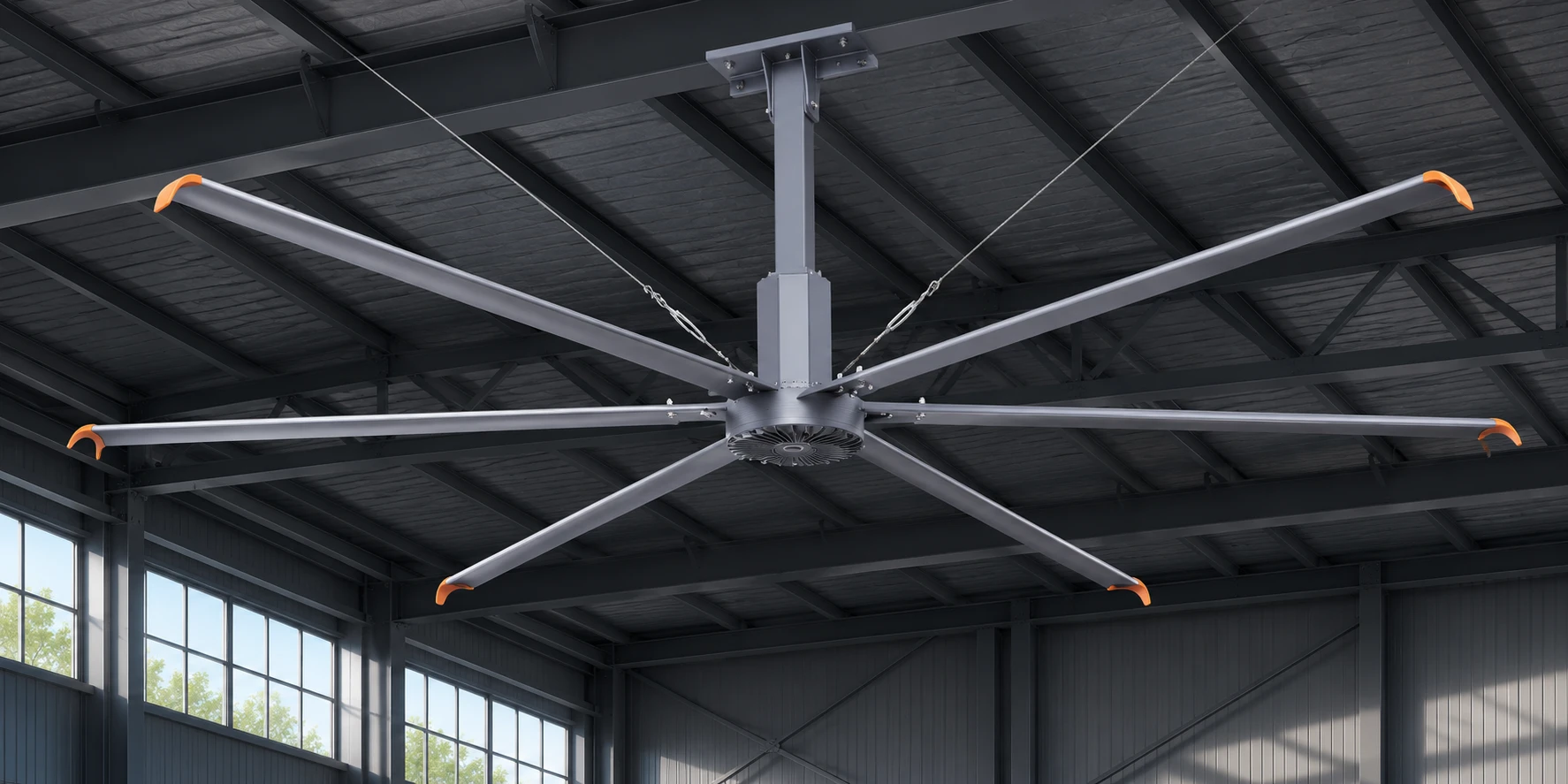
Available diameters: 3.0, 3.7, 4.3 and 5.0 m.
Available diameters: 6.1, 6.7, 7.3 and 7.5 m. Largest format listed as 7.5m X.
Review the occupied area, ceiling height, structure and other equipment before selecting a fan and mounting arrangement.
Fan suitability and layout are reviewed for each building. Structural requirements and installation responsibilities must be confirmed before work begins.
Discuss your projectOwners, consultants and contractors can define supply responsibilities, installation interfaces and the agreed testing and handover requirements with Drytronics.
Discuss the operating conditions and site constraints before finalizing equipment. Explore the relevant industry context below.
Discuss your applicationPlan circulation around racking, vehicle routes and occupied work areas.
Coordinate fan placement with processes, cranes and building services.
Review ceiling height, occupancy and the existing ventilation system.
Assess structural support, clearances and areas that need air movement.
Floor area, ceiling height, roof profile and the zones to be served.
Mounting conditions and separation from cranes, sprinklers and other building services.
People, processes, operating hours and any restrictions on air movement.
Existing ventilation, air conditioning and the preferred control arrangement.
Model capacities, dimensions, electrical characteristics and performance data are confirmed against selected equipment and design conditions.
Fan selection, mounting and controls coordinated around the actual building and the agreed project scope.
Share the floor plan, ceiling height, roof structure, occupied zones and obstructions. Cranes, racking, sprinklers and other building services need to be considered alongside the required circulation.
An HVLS fan moves air; it does not provide refrigeration or remove moisture. Whether it is appropriate depends on the building, comfort objective and existing ventilation or cooling system.
Yes. The agreed project scope can cover fan supply, layout and installation coordination, including mounting, controls and electrical interfaces. Structural suitability must be assessed for the actual site.